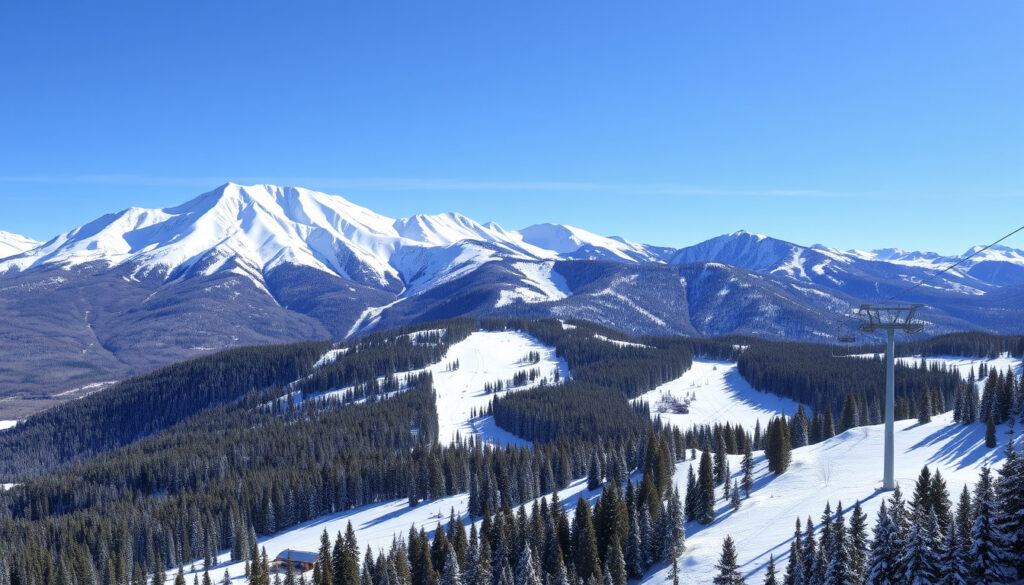
Lake Mountain Alpine Resort – Essential 2025 Visitor Guide
Lake Mountain Alpine Resort: Ultimate 2025 Visitor Guide
Lake Mountain Alpine Resort stands apart from traditional ski destinations across Victoria. Rather than focusing on downhill runs and lift infrastructure, this family-oriented resort has carved a niche as the region’s premier cross-country skiing destination, offering groomed trails suitable for beginners through to experienced Nordic skiers. Located in the Yarra Ranges approximately 150 kilometres northeast of Melbourne, the resort attracts visitors seeking a more accessible and budget-friendly winter experience.
During the declared snow season from June 7 to September 7, 2025, the resort provides 37 kilometres of maintained trails alongside activities including snowshoeing and tobogganing. With vehicle entry priced at $67 and accommodating up to eight passengers per car, Lake Mountain presents a notably economical option for families and groups looking to experience Victorian snowfall without the premium costs associated with downhill resorts.
This guide compiles current conditions, practical planning information, and essential details to help visitors make informed decisions about including Lake Mountain in their winter travel plans.
What is Lake Mountain Alpine Resort?
Lake Mountain Alpine Resort occupies a distinctive position among Victorian alpine destinations. Established as a cross-country-focused facility, the resort deliberately omits traditional ski lifts, instead prioritising groomed trails that wind through Snowy Ridge and the surrounding Victorian high country. This approach creates an environment distinctly different from downhill-centric venues such as Mount Buller, Falls Creek, and Hotham.
The resort’s design philosophy centres on accessibility for families and beginners. Gentle terrain such as the Echo Flat loop provides ideal conditions for those new to winter sports, while more experienced cross-country skiers can test themselves on advanced options including Upper Royston. The absence of lift queues and the straightforward terrain create an environment where visitors can progress at their own pace.
- No traditional ski lifts—trails are accessed entirely on foot or with touring skis
- Vehicular entry model covers up to 8 passengers per car, eliminating individual lift ticket costs
- Multiple activity options beyond skiing, including designated snowshoeing and tobogganing areas
- Located approximately 2.5 hours from Melbourne via Maroondah Highway and Mansfield-Woods Point Road
- Focus on beginner-friendly terrain with progressive trail difficulty
- Strong emphasis on budget accessibility for families and groups
| Detail | Information |
|---|---|
| Resort Location | Yarra Ranges, Victoria |
| 2025 Snow Season | June 7 – September 7 |
| Total Trail Length | 37 kilometres groomed cross-country trails |
| Vehicle Entry Fee | $67 per car (up to 8 passengers) |
| Operating Hours | Thursday–Monday, 8am–3:30pm |
| Distance from Melbourne | Approximately 150km (2–2.5 hours drive) |
| Access Road | Maroondah Highway, then Mansfield-Woods Point Road |
| Beginner Terrain | Echo Flat loop and designated flat areas |
Is Lake Mountain Open and What Are Current Conditions?
Understanding current operational status and snow conditions proves essential for planning any visit to Lake Mountain. The resort operates within a defined snow season, and conditions outside this window can vary significantly from the groomed winter playground visitors expect during peak operation.
Snow Report Updates
As of early September 2025, snow conditions at Lake Mountain reflect the transition toward season’s end. The official daily update indicates that most trails no longer hold consistent snow cover, with remaining snow concentrated primarily on Upper Royston, Panorama, and the Upper Echo Flat Trail. The Muster Trail remained closed for the entirety of the 2025 season.
Recent precipitation data shows no new snowfall in the 24 hours preceding September 6, 2025, with resort cameras serving as the primary tool for assessing current surface conditions. Earlier in the 2025 season, an off-season April snowfall of 4 centimetres accumulated over 42 hours, though this occurred outside the declared snow season when no lifts or runs were operational.
Official resort cameras provide real-time visual assessment of trail conditions. Visitors planning trips toward the beginning or end of the declared season should verify current snow status through the resort’s daily update page before travelling, as conditions can change rapidly with weather systems.
Opening Status
The 2025 declared snow season ran from June 7 through September 7. During this period, the resort maintained regular operating hours, with gate opening at 8am, facilities accessible by 8:30am, ticket sales concluding at 3pm, and full closure at 4pm. The resort operated Thursday through Monday throughout the season, with Tuesday and Wednesday closures standard outside July Victorian school holidays.
The July school holiday period from July 5 to 20, 2025, represented peak operational coverage, with the resort maintaining seven-day access during this timeframe. Beyond the September 7 season conclusion, the resort transitions to an off-season status where facilities are limited and trail grooming ceases.
How to Get to Lake Mountain and Plan Your Visit
Reaching Lake Mountain requires self-transportation, as no direct public transport services operate to the resort. The journey from Melbourne follows a well-marked route through the Victorian high country, though conditions can change rapidly during winter months. Those unfamiliar with alpine driving conditions may benefit from reviewing our Victoria driving resources before undertaking the journey.
Directions from Major Cities
The drive from Melbourne covers approximately 150 kilometres and typically requires 2 to 2.5 hours under normal conditions. Travellers depart Melbourne via the Eastern Freeway and follow the Maroondah Highway northeast through Healesville and Marysville. Beyond Marysville, the route transitions to Mansfield-Woods Point Road, which winds through alpine forest before reaching the resort access road.
The Victorian tourism infrastructure supports this route with clear signage and services available in towns along the way. Mansfield serves as the primary service centre before the final approach to the mountain, offering fuel, food, and accommodation options for those choosing to break their journey.
Snow chains may be required during active snow events, though as of early September 2025, chain requirements had not been mandated. Visitors should monitor Bureau of Meteorology snow forecasts for the Victorian alpine region and be prepared to fit chains if conditions deteriorate during their visit.
Travel Tips
Early departure from Melbourne significantly improves the experience, as road congestion can develop during peak periods, particularly on weekends and during school holidays. Weekday visits, outside Tuesdays and Wednesdays when the resort closes, generally offer lighter traffic on both the highway and resort access roads.
The journey involves driving through varying elevation, meaning conditions at the resort may differ substantially from those encountered in Melbourne or lower-altitude towns along the route. Dressing in layers and carrying emergency supplies including food, water, and warm clothing remains advisable regardless of the forecast.
Top Activities and Accommodation at Lake Mountain
Lake Mountain provides a range of winter activities designed to accommodate visitors regardless of skiing ability or experience. The resort’s programming reflects its focus on family-friendly recreation rather than advanced alpine pursuits. Families planning extended stays may find our Melbourne travel guides useful for combining domestic and international travel plans.
Cross-Country Skiing and Snowshoeing
The 37 kilometres of groomed cross-country trails form the core offering at Lake Mountain. Trail maintenance creates consistent conditions for classic Nordic technique, with the network catering to beginners through advanced skiers. The Echo Flat area provides particularly gentle terrain ideal for those taking their first steps on skis, while Upper Royston offers more challenging gradients for experienced practitioners.
Designated snowshoeing trails allow non-skiers to explore the same snowy landscapes. Snowshoes can typically be hired from the resort or nearby operators, though current pricing details were not available at the time of compilation. This activity provides an excellent alternative for families with mixed ability levels.
Tobogganing
Tobogganing ranks among the most popular family activities at Lake Mountain, with a dedicated area maintained for sliding activities. Separate tickets are required for tobogganing access, though specific pricing was not detailed in available official sources. The activity draws significant family crowds, particularly during school holiday periods when the resort operates seven days per week.
On-Site Lodging Options
Accommodation options directly at Lake Mountain remain limited. The resort primarily serves day visitors, with overnight facilities sparse compared to downhill destinations offering ski-in/ski-out lodging. Visitors requiring accommodation should look to nearby Mansfield or Jamieson, which offer a selection of lodges and guesthouses.
The official resort guidance recommends Mansfield and Jamieson as base options for families planning extended visits. Visitors should book accommodation well in advance during peak periods such as the July school holidays, as nearby lodging fills quickly when the resort operates at maximum capacity. For those planning an extended visit, the official resort guidance recommends Mansfield and Jamieson as base options, and you can find more details on the Lake Mountain Alpine Resort visitor guide at Big W Rouse Hill hours.
Best Time to Visit Lake Mountain
Timing a Lake Mountain visit requires balancing snow quality, crowd levels, and operational considerations. The resort’s fixed seasonal window and operating schedule create distinct advantages and disadvantages depending on when visitors choose to travel.
The Victorian snow season generally delivers the most reliable conditions from mid-July through August, coinciding with the coldest temperatures and most consistent precipitation. The July Victorian school holiday period from July 5 to 20, 2025, represents the optimal window for families, combining peak snow coverage with the resort’s full seven-day operational schedule.
Those prioritising uncrowded conditions and gentle learning environments may find early June or late August more suitable. These periods typically see lighter visitor numbers while the resort remains open for business. However, early-season visitors risk encountering marginal snow coverage, while late-season visitors may find conditions deteriorating as the September season end approaches.
- July school holidays (July 5–20): Peak snow, full operations, but maximum crowds
- Early June: Quieter conditions, potential for thinner snow coverage
- Late August: Good snow typically reliable, moderate visitor numbers
- Avoid Tuesdays/Wednesdays: Closed outside July school holidays
Understanding the 2025 Season Context
The 2025 snow season at Lake Mountain followed patterns consistent with broader Victorian alpine trends. While specific depth measurements were not consistently reported, mountain weather monitoring indicated that late-season additions benefited Victorian resorts overall. The early season reporting noted particular uncertainty around Australian conditions as attention focused on Northern Hemisphere forecasts.
- April 2025: Off-season snowfall of 4cm over 42 hours, with 5 bluebird days noted but no resort operations
- June 7, 2025: Declared snow season commences
- July 5–20, 2025: Victorian school holiday period, seven-day resort operations
- September 7, 2025: Declared snow season concludes
- Early September 2025: Patchy conditions reported, most trails without consistent snow cover
Fact versus Uncertainty
When planning a visit to Lake Mountain, visitors benefit from distinguishing between confirmed information and elements that remain variable or unclear.
| Established Information | Elements Requiring Verification |
|---|---|
| $67 vehicle entry fee (up to 8 passengers) | Tobogganing ticket pricing |
| 37 kilometres of groomed cross-country trails | Current trail difficulty classifications |
| Season: June 7 – September 7, 2025 | Specific elevation figures |
| No traditional ski lifts | Detailed accommodation recommendations and pricing |
| Operating Thursday–Monday (closed Tue/Wed) | Precise snow depth measurements at any given time |
| Cross-country, snowshoeing, and tobogganing available | Availability of equipment hire and current hire pricing |
| July 5–20 school holiday seven-day operation | 2026 season dates and operational details |
This distinction proves particularly relevant for visitors making firm plans. Official resort sources including the daily update page and direct resort contact provide the most current operational details, especially for timing near the start or end of the declared season.
Lake Mountain in the Victorian Alpine Landscape
Lake Mountain occupies a unique position within Victoria’s alpine offerings. While destinations such as Mount Buller, Falls Creek, and Hotham focus primarily on downhill skiing supported by extensive lift infrastructure, Lake Mountain deliberately diverges from this model. The resort’s cross-country orientation reflects a specific niche within the broader winter tourism market.
This differentiation manifests practically in both cost structure and visitor demographics. The $67 vehicle entry compares favourably against the combined lift pass and entry costs at downhill resorts, where individual tickets can exceed $100 per person per day. Families benefit particularly from this model, as children and non-skiing relatives incur no additional charges beyond the single vehicle entry fee.
The 2.5-hour travel time from Melbourne positions Lake Mountain as among the most accessible of Victoria’s alpine destinations, appealing particularly to day-trippers and those seeking a less intensive winter recreation experience than full-scale downhill skiing typically demands.
Summary
Lake Mountain Alpine Resort offers a distinctly different alpine experience compared to Victoria’s downhill-focused destinations. With 37 kilometres of groomed cross-country trails, accessible pricing, and activities suitable for complete beginners, the resort fills an important niche for families and those new to winter sports. The declared 2025 season from June 7 to September 7 provided the primary window for operations, with July school holidays representing peak conditions and seven-day access.
Those considering international winter travel may find relevant information in our guides to Melbourne to Hong Kong Flights, while visitors requiring documentation verification should consult our Police Check Victoria resource for travel documentation needs.
Frequently Asked Questions
When is the best time to visit Lake Mountain?
The July Victorian school holidays (July 5–20, 2025) offer peak snow coverage and seven-day operations. For fewer crowds, early June or late August provides reasonable conditions with lighter visitor numbers.
What are the cross-country ski trails at Lake Mountain?
The resort maintains 37 kilometres of groomed cross-country trails ranging from beginner loops like Echo Flat to advanced options including Upper Royston. Trail conditions update daily and can be verified through the resort’s daily update page.
How much does it cost to enter Lake Mountain?
Vehicle entry costs $67 per car, with the fee covering up to 8 passengers. This represents the total entry charge; unlike downhill resorts, no per-person lift tickets apply since the resort operates without traditional ski lifts.
Does Lake Mountain have accommodation?
On-site accommodation is limited, with the resort primarily serving day visitors. Nearby Mansfield and Jamieson offer lodges and guesthouses; visitors should book well in advance during peak periods such as the July school holidays.
What activities are available at Lake Mountain?
Beyond cross-country skiing, the resort offers designated snowshoeing trails and tobogganing areas. Tobogganing requires a separate ticket, and beginner-friendly flat terrain like Echo Flat provides ideal learning conditions for those new to winter sports.
How far is Lake Mountain from Melbourne?
The resort lies approximately 150 kilometres northeast of Melbourne, requiring a 2 to 2.5 hour drive via Maroondah Highway to Mansfield followed by Mansfield-Woods Point Road to the resort.
What are the operating hours during the 2025 season?
The resort operates Thursday through Monday, 8am to 3:30pm, with gate opening at 8am and ticket sales concluding at 3pm. Tuesdays and Wednesdays remain closed except during July Victorian school holidays.
Can beginners ski at Lake Mountain?
Lake Mountain suits beginners well, with gentle terrain including the Echo Flat loop providing safe learning environment. The absence of lift infrastructure eliminates concerns about chairlift safety, and the flat, predictable trails create an ideal introduction to cross-country skiing.
More related posts
 The Body Keeps the Score – Trauma’s Effects on Body and Brain
 Toilet Seat Guide: Fit, Buy & Replace in Ireland (2025)
 Samantha Ruth Prabhu: Divorce, Health & New Movies
 Pirates of the Caribbean Movies in Order: Full Guide & Timeline
 Brenda Blethyn: Life, Career, and Vera Myths
 Neil Finn Buys Australian Home: Current Life and Career
 Marnus Labuschagne: Biography, Age, Religion, Family & Career
 Signs of ADHD: Symptoms in Children, Adults, and Women
