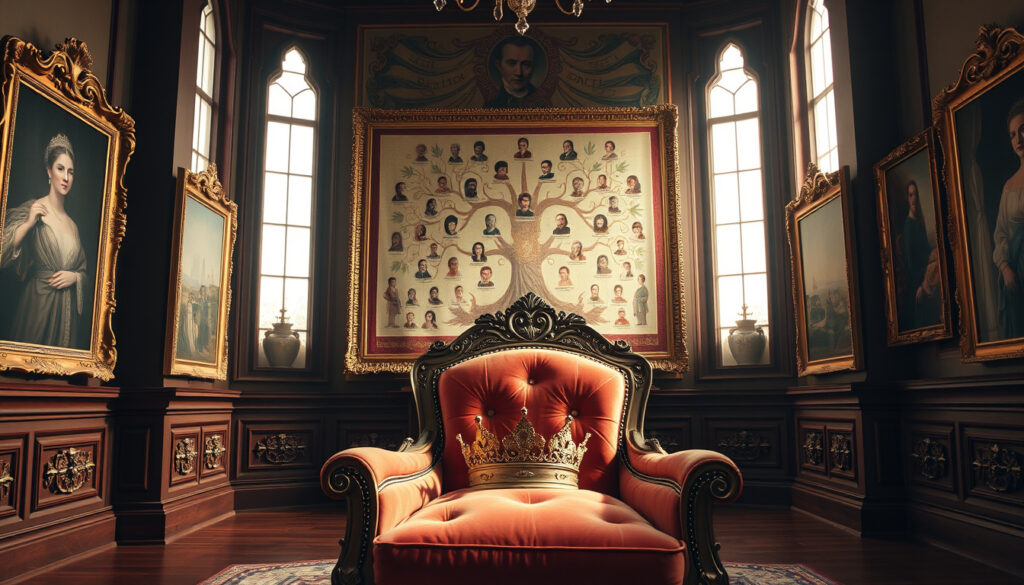
Queen Mother: Biography, Family, and Relationships
There aren’t many centenarians whose drinking habits are more discussed than their official duties, and yet Elizabeth Bowes-Lyon, the Queen Mother, managed exactly that. She lived through two world wars, helped steady the monarchy after an abdication crisis, and became the most photographed woman of her era while keeping a very private emotional world.
Born: 4 August 1900 ·
Died: 30 March 2002 (aged 101) ·
Queen consort of the United Kingdom: 1936–1952 ·
Mother of: Queen Elizabeth II ·
Spouse: King George VI
Quick snapshot
- Born Elizabeth Bowes-Lyon, daughter of the Earl of Strathmore (Encyclopaedia Britannica)
- Married Prince Albert (later George VI) in 1923 (Encyclopaedia Britannica)
- Became queen consort in 1936 after the abdication crisis (Encyclopaedia Britannica)
- Queen consort of the United Kingdom from 1936 to 1952 (Encyclopaedia Britannica)
- Widowed in 1952 on the death of George VI (Encyclopaedia Britannica)
- Died 30 March 2002 at the age of 101 (People)
| Attribute | Detail |
|---|---|
| Full name | Elizabeth Angela Marguerite Bowes-Lyon |
| Birth date | 4 August 1900 |
| Death date | 30 March 2002 |
| Spouse | King George VI (m. 1923–1952) |
| Children | Princess Margaret and Queen Elizabeth II |
| Reign as queen consort | 1936–1952 |
What does the term Queen Mother mean?
Origin and official definition
The title Queen Mother is used for the widow of a king who is also the mother of the reigning monarch. After the accession of her daughter Elizabeth II in 1952, Elizabeth Bowes-Lyon was formally styled Queen Elizabeth The Queen Mother (Encyclopaedia Britannica). The title distinguishes her from a dowager queen and signals her continued role within the royal family.
Difference between Queen Mother and Queen Dowager
While both terms refer to the widow of a king, “Queen Mother” carries an additional familial dimension — she is the mother of the reigning monarch. A queen dowager may not have a child on the throne. The distinction mattered for Elizabeth, because her daughter was not only the new sovereign but also needed her mother’s symbolic support in the early years of her reign (Encyclopaedia Britannica).
The title gave the Queen Mother a unique institutional position: she was no longer queen consort, but she was not merely a dowager either. She retained a public profile that no other royal widow had held so visibly before.
Did Queen Elizabeth and the Queen Mother get along?
Mother-daughter relationship dynamics
Biographers describe a close bond tinged with formality. Royal historian Kate Williams noted: “They had a very close bond, but there was also an element of formality.” The Queen Mother was Elizabeth II’s most trusted confidante during the early years of her reign, yet the abdication crisis of 1936 had created a lasting emotional undercurrent. The Queen Mother’s own letters reveal a woman who recorded her thoughts faithfully for more than 70 years, but in public she never broke the wall of discretion around her daughter (CBS News).
Public vs private interactions
Public photographs show them side by side, smiling. Private accounts, however, suggest that the Queen Mother exerted a subtle but persistent influence behind the scenes. She reportedly opposed Prince Philip’s courtship of Elizabeth and tried to persuade her daughter to marry a peer’s son instead (biography summary via Google Books).
The Queen Mother’s relationship with her daughter followed a familiar royal script: warmth in public, private maneuvering over partners and policy. Elizabeth II ultimately made her own choices, but not without her mother’s attempts to steer them.
Was the Queen Mother a big drinker?
Reported drinking habits
Accounts from multiple sources describe a routine in which the Queen Mother had a first drink around noon, commonly a Dubonnet-and-gin cocktail. According to reports, the pattern often continued with red wine at lunch and port later in the day (People). Her niece and former lady-in-waiting Margaret Rhodes disputed the “drunk” characterization and said the Queen Mother preferred a gin martini mix she usually made herself (International Business Times UK).
Public anecdotes and denials
The public commentary on her drinking often links it to her longevity: she lived to age 101. Some modern estimates place her weekly consumption at about 70 units, but these are inferential rather than directly measured (Wikipedia). Biographers describe her as a devoted social drinker rather than someone clinically identified with alcoholism. One luncheon account mentions multiple gin-and-Dubonnet cocktails, wine, and port (Marie Claire).
The fascination with the Queen Mother’s drinking reveals more about public curiosity than about her actual consumption. The documented pattern is routine and moderate — not clinical — but the myth has outrun the evidence.
Did the Queen Mother like Diana?
Initial relationship
According to biographical records, the Queen Mother was reportedly fond of Diana early in the marriage. She welcomed the young princess into the family and was seen as a benign elder figure during the early years of Charles and Diana’s relationship (The Himalayan Times).
Later tensions
After the separation, the Queen Mother sided firmly with the royal family. A 2009 biography released details that she thought the public airing of Charles and Diana’s marriage problems was “utterly abhorrent” (The Himalayan Times). The same biography summary says she had “relations with Diana and other in-laws especially when their marriages were collapsing” (biography summary via Google Books).
The Queen Mother’s affection for Diana appears to have been conditional. When the marriage fractured, institutional loyalty trumped personal warmth — a pattern that repeated across her relationships with other in-laws whose marriages collapsed.
Did Margaret ever forgive Elizabeth?
Margaret’s feelings about the abdication
Princess Margaret resented the circumstances that forced her father onto the throne. The abdication of Edward VIII in 1936 upended the family’s life, and Margaret bore the weight of that upheaval. The Queen Mother’s relationship with her younger daughter was reportedly difficult. A biographical summary describes a strained dynamic between them (biography summary via Google Books).
Later years and reconciliation
Biographers suggest that Margaret and Elizabeth eventually reconciled, though the rift left a mark. Margaret died on 9 February 2002, just two months before the Queen Mother passed away on 30 March 2002 (People). The close chronology of their deaths brought a poignant end to a relationship that had never fully healed.
Margaret’s resentment was not directed at her sister Elizabeth personally, but at the institution that reshaped their childhood. The Queen Mother, as the surviving parent, bore some of that weight — and the reconciliation, though real, was never complete.
Timeline
- 4 August 1900 – Born in London (Encyclopaedia Britannica)
- 26 April 1923 – Marries Prince Albert, Duke of York (Encyclopaedia Britannica)
- 11 December 1936 – Husband becomes King George VI; she becomes queen consort (Encyclopaedia Britannica)
- 1939–1945 – Remains in London during WWII, visits bombed areas
- 6 February 1952 – Husband dies; becomes Queen Mother (Encyclopaedia Britannica)
- 30 March 2002 – Dies at Royal Lodge, Windsor (People)
aussiereviewly.com, youtube.com, facebook.com, youtube.com, lordsofthedrinks.org
For a deeper look into the Queen Mother’s drinking habits and family tensions, the Queen Mothers drinking habits and family tensions offers a detailed account of her private life.
Frequently asked questions
How many children did the Queen Mother have?
Two: Princess Margaret (born 1930) and Queen Elizabeth II (born 1926).
What was the Queen Mother’s maiden name?
Bowes-Lyon — she was born Elizabeth Angela Marguerite Bowes-Lyon.
Did the Queen Mother serve in World War II?
No, she did not serve in the military, but she remained in London during the Blitz and visited bombed areas alongside her husband.
Why was she called the Queen Mother and not Queen Dowager?
Because she was the mother of the reigning monarch. “Queen Mother” distinguishes her from a dowager queen who does not have a child on the throne.
What was her relationship with Prince Charles?
She was a doting grandmother to Prince Charles, and he reportedly adored her. She was a stabilizing presence during his childhood.
Where is the Queen Mother buried?
She is buried in the King George VI Memorial Chapel at St George’s Chapel, Windsor Castle, alongside her husband.
How old was she when she married King George VI?
She was 22 years old when she married Prince Albert, Duke of York, on 26 April 1923.
For readers of the British royal narrative, the choice is clear: look past the public spectacle to the private letters and biographies, because that is where the real relationships lived. The Queen Mother’s legacy is not just longevity and gin — it is the quiet, sometimes painful, negotiation of love and duty across three generations.
More related posts
 Home Sweet Home Alone – Plot, Cast and Disney+ Guide
 Katee Sackhoff: Biography, Age, Husband, Mandalorian Exit
 Bed Sheet Changing Frequency: Expert Washing Schedule
 Richard Burton’s Death and His Love for Elizabeth Taylor
 Basil Zempilas: Biography, Political Career, and Key Facts
 Jenny McCarthy: Health, Relationships, Biography and Recent Update
 Rodd and Gunn – New Zealand Menswear Heritage
 Delta Airlines 2025 Review: Flights to Ireland & More
