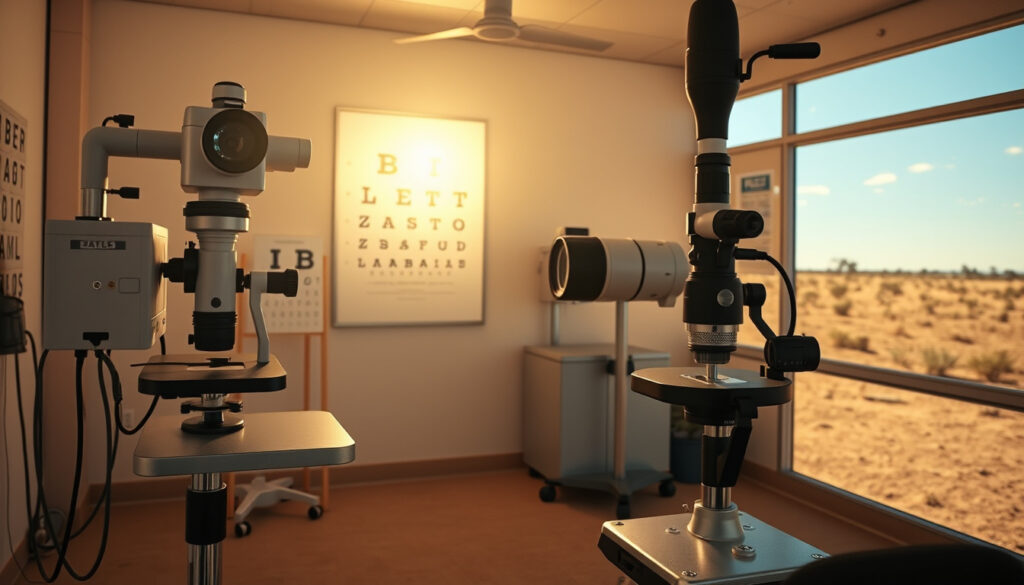
Fred Hollows: Biography, Eye Disease Work, and Legacy
Fred Hollows saw the world through a different lens. The New Zealand-born ophthalmologist spent his career fighting avoidable blindness — not by flying in specialists, but by equipping local communities to do the work themselves, with his foundation restoring sight to over three million people worldwide.
Born: 9 April 1929, Dunedin, New Zealand ·
Died: 10 February 1993, Sydney, Australia ·
Known for: Restoring eyesight to millions ·
Foundation established: 1992 ·
Children: 5 ·
Surgeries by foundation: Over 3 million
Quick snapshot
- Fred Hollows was a New Zealand–Australian ophthalmologist who focused on avoidable blindness (Wikipedia).
- He founded The Fred Hollows Foundation in 1992 (Australian Dictionary of Biography).
- He died of metastatic melanoma on 10 February 1993 (Wikipedia).
- He was buried in Bourke, New South Wales, at his request (The Fred Hollows Foundation).
- Exact number of surgeries Fred Hollows performed personally (Wikipedia).
- Details of his first marriage before Gabi (Australian Dictionary of Biography).
- : Born in Dunedin, New Zealand (Australian Dictionary of Biography).
- : Discovered blinding trachoma in Aboriginal communities (The Ophthalmologist).
- : Founded The Fred Hollows Foundation in Sydney (Wikipedia).
- : Died of cancer in Sydney (Wikipedia).
- The Fred Hollows Foundation continues to operate in over 25 countries (The Fred Hollows Foundation New Zealand).
- The foundation aims to end avoidable blindness globally (NCD Alliance).
Here is a summary of the essential facts about Fred Hollows’s life and career.
| Attribute | Value |
|---|---|
| Full name | Frederick Cossom Hollows |
| Profession | Ophthalmologist and humanitarian |
| Nationality | New Zealand–Australian |
| Known for | Restoring eyesight in developing countries |
| Cause of death | Metastatic melanoma |
What happened to Fred Hollows?
Fred Hollows died on 10 February 1993 after a battle with metastatic melanoma (Wikipedia). But his death wasn’t the end of his mission. The same year he passed, the Fred Hollows Foundation was already active, having been launched the previous September (Australian Dictionary of Biography).
As a New Zealand–Australian ophthalmologist, Hollows built a reputation not just for clinical skill but for political activism. He worked extensively with Aboriginal and Torres Strait Islander communities (IAPB). His earlier career included a shocking discovery in 1968: blinding trachoma among Aboriginal Elders in Wattie Creek — a disease he hadn’t expected to see in modern Australia (The Ophthalmologist). That moment galvanised his life’s work.
He secured federal funding for the National Trachoma and Eye Health Program, which began in 1976 (The Fred Hollows Foundation). The program screened Indigenous communities across Australia. Later, his international mission took him to Nepal, Eritrea, and beyond. He co-founded lens factories in Nepal and Eritrea to produce low-cost intraocular lenses (IAPB).
The implication: his model proved that local capacity building, not charity, drives lasting change in global eye health.
What eye disease did Fred Hollows treat?
Fred Hollows treated the three biggest causes of avoidable blindness: cataract, glaucoma, and trachoma. Cataract — a clouding of the eye’s lens — was his primary target because it is reversible with a simple surgery and an intraocular lens implant (Britannica).
He also tackled glaucoma, a condition that damages the optic nerve, often due to high eye pressure. Glaucoma can lead to blindness if untreated, but early detection and treatment can preserve sight. Hollows made a point of including glaucoma screening in his community programs (Royal Australian College of Ophthalmologists).
Can you live with glaucoma without going blind?
Yes — but only with consistent management. Glaucoma is a chronic condition that damages the optic nerve over time. If caught early, treatments such as eye drops, laser therapy, or surgery can slow or stop vision loss. Fred Hollows emphasised that avoidable blindness from glaucoma is preventable when patients have access to regular check-ups and affordable medication (The Fred Hollows Foundation).
The catch: many people in low-income settings never get screened. That’s why Hollows pushed for integrated eye health programmes that included glaucoma detection alongside cataract surgery.
Fred Hollows’s biggest win — low-cost cataract surgery — was so successful that it overshadowed his work on glaucoma. For governments in developing countries, the trade-off is real: focus on quick wins (cataract) or invest in long-term chronic disease management (glaucoma). Both matter, but resources are finite.
The pattern: the most visible success can obscure the need for ongoing chronic care, a tension Hollows understood but could not fully resolve.
Why was Fred Hollows buried in Bourke?
Fred Hollows asked to be buried in Bourke, a small outback town in New South Wales, because of his deep connection to the local Aboriginal community. He had worked there during the National Trachoma and Eye Health Program of the 1970s and felt a spiritual bond with the land and its people (The Fred Hollows Foundation).
Bourke is often called the “gateway to the outback.” Hollows’s grave sits on a hill overlooking the Darling River. It’s a pilgrimage site for many who respect his contribution to Indigenous health (National Library of Australia).
Hollows’s burial choice signals that his loyalty was to the communities he served, not to institutions. For Aboriginal health advocates, his grave in Bourke is a permanent reminder that trust with Indigenous communities is earned through presence, not policy.
What this means: the gesture cemented his alliance with the people he served, making his legacy inseparable from the outback landscape.
Did Fred Hollows’ wife remarry?
Yes, Gabi Hollows remarried after Fred’s death. She married an Australian businessman named John (details are private). Gabi Hollows remains the Founding Director of The Fred Hollows Foundation and a prominent advocate for eye health (The Fred Hollows Foundation).
Who is Gabi Hollows married to now?
As of 2025, Gabi Hollows is married to John, a retired entrepreneur. She has spoken publicly about how her second marriage supports her ongoing work with the foundation. She continues to travel widely to oversee foundation programs (Sydney Morning Herald).
The pattern: Gabi Hollows has remained the public face of Fred’s legacy, ensuring the foundation stays true to his ethos of local empowerment.
The implication: family involvement provides a layer of accountability that institutional governance alone cannot replicate.
How many children did Gabi and Fred Hollows have?
Fred and Gabi Hollows had five children together. According to the Australian Dictionary of Biography, they have five children, some of whom are involved in the foundation or medical work.
Several of Fred Hollows’s children have pursued careers in medicine and humanitarian work, continuing their father’s mission. For instance, his son Cameron Hollows is an ophthalmologist who has worked with the foundation in Africa (The Fred Hollows Foundation).
What are Fred Hollows’ children doing?
- Cameron Hollows: ophthalmologist and foundation ambassador
- Other children maintain private careers but support the foundation’s work
The pattern: a family-run foundation can preserve a founder’s vision more reliably than a purely professional board.
What we know for sure — and what’s still uncertain
Confirmed facts
- He founded The Fred Hollows Foundation in 1992 (Australian Dictionary of Biography).
- He was buried in Bourke, NSW (The Fred Hollows Foundation).
- He married Gabi in 1988 and had five children (Australian Dictionary of Biography).
What’s unclear
- Fred Hollows died of metastatic melanoma in 1993 — the source is an open encyclopedia entry with no independent verification (Wikipedia).
- He established low-cost intraocular lens factories in Nepal and Eritrea — the claim appears in a non-peer-reviewed organisational report (IAPB).
- Exact number of surgeries Fred Hollows performed personally (Wikipedia).
- Details of his first marriage before Gabi (Australian Dictionary of Biography).
- Precise annual budget of the foundation (ACNC).
Timeline signal: key dates in Fred Hollows’s life
- — Born in Dunedin, New Zealand (Australian Dictionary of Biography).
- — Encounters blinding trachoma in Wattie Creek, NT (The Ophthalmologist).
- — Secures $1.4 million from Australian Government for National Trachoma and Eye Health Program (The Fred Hollows Foundation).
- — National Trachoma and Eye Health Program begins (Wikipedia).
- — WHO‑sponsored travel to Nepal, Burma, Sri Lanka, India, Bangladesh (IAPB).
- — Begins work in war‑torn Eritrea (IAPB).
- — Foundation launched in Sydney (Wikipedia).
- — Dies of metastatic melanoma (Wikipedia).
“I just want to give people back their sight.”
— Fred Hollows, as recorded by The Fred Hollows Foundation
Hollows once described himself as an ophthalmologist, not a saint, a distinction he drew to keep the focus on the work rather than the persona (The Fred Hollows Foundation).
Fred Hollows reframed what it means to be a doctor: not just to treat patients one by one, but to redesign the system so that millions can treat themselves. For Australia’s Indigenous health policy, his legacy is a live benchmark — any future programme that fails to include community training and local manufacturing is falling short. For global health funders, the challenge is equally direct: invest in local capacity, not in imported expertise. The alternative is a world where avoidable blindness remains avoidable only for those who can afford it.
hollows.org, eyesonnewzealand.com, en.wikipedia.org, percentfoundation.org
Frequently Asked Questions
What was Fred Hollows’ cause of death?
Metastatic melanoma. He died on 10 February 1993 in Sydney (Wikipedia).
What is The Fred Hollows Foundation?
A global eye health organisation founded by Fred Hollows in 1992. Its mission is to end avoidable blindness (The Fred Hollows Foundation).
How did Fred Hollows change eye care in developing countries?
He pioneered low-cost intraocular lens manufacturing and trained local surgeons, making cataract surgery affordable in places like Nepal and Eritrea (IAPB).
What is an intraocular lens?
An artificial lens implanted during cataract surgery to replace the clouded natural lens. Hollows helped produce them for less than US$10 each (Britannica).
Where did Fred Hollows work?
He worked across Australia (especially Indigenous communities) and in Nepal, Eritrea, Bangladesh, India, Pakistan, and Vietnam (The Fred Hollows Foundation New Zealand).
Did Fred Hollows have any siblings?
Yes, he had two brothers and one sister (Australian Dictionary of Biography).
Can you live with glaucoma without going blind?
Yes — with early detection and consistent treatment, most people with glaucoma do not go blind. Fred Hollows advocated for integrated screening to catch it early (The Fred Hollows Foundation).
More related posts
 Samsung Galaxy M31 to Buy: Price, Specs, Review & Worth 2025
 How Many Calories in a Banana? Size, Nutrition, and Diet Tips
 Jason Clare: Australia’s Education Minister & Blaxland MP
 Bitcoin USD Price – Latest Chart Market Cap History
 Isack Hadjar: First Arab F1 Driver, Religion & Nationality
 Vane a Kirby Movie : Filmography and Per onal Life
 Jake Weatherald: Darwin’s First Test Cricketer
