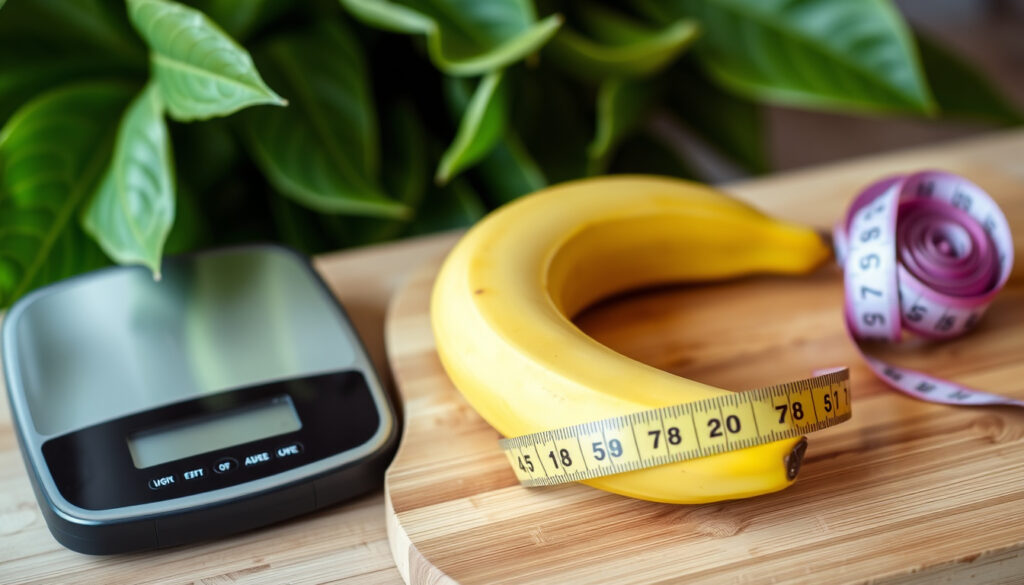
How Many Calories in a Banana? Size, Nutrition, and Diet Tips
You’ve probably grabbed a banana as a quick breakfast or pre-workout snack without thinking twice. But when you start counting calories, that innocent yellow fruit suddenly raises questions: exactly how many calories are in a banana, and does it fit into your diet goals? This article breaks down banana calories by size, compares them to common breakfast alternatives like eggs, and separates weight-loss fact from myth.
small banana (6-7 inches): 90 ·
medium banana (7-8 inches): 105 ·
large banana (8-9 inches): 121 ·
carbohydrates (medium): 28 g ·
natural sugar (medium): 15 g ·
fiber (medium): 3 g
Quick snapshot
- Small: 90 – Chiquita (banana brand)
- Medium: 105 – USDA SNAP-Ed (government nutrition program)
- Large: 121 – Chiquita
- Carb: 28 g – Harvard T.H. Chan Nutrition Source (academic research center)
- Fiber: 3 g – Harvard T.H. Chan Nutrition Source
- Protein: 1.3 g – Harvard T.H. Chan Nutrition Source
- Fat: 0.4 g – Harvard T.H. Chan Nutrition Source
- Potassium: 422 mg – Harvard T.H. Chan Nutrition Source
- Vitamin B6: 0.4 mg – Harvard T.H. Chan Nutrition Source
- Vitamin C: 10 mg – Harvard T.H. Chan Nutrition Source
- Low GI (48-54) – Harvard T.H. Chan Nutrition Source
- Resistant starch in green bananas – Healthline (medically reviewed health resource)
A medium banana packs about 105–110 calories, but the numbers shift noticeably with size. Here’s the breakdown of core nutrition data.
| Label | Value | Source |
|---|---|---|
| Calories per 100 g | 89 | Dole (fruit producer) |
| Average weight (medium, peeled) | 100–118 g | USDA SNAP-Ed (government nutrition program) |
| Sugar per medium banana | 15 g | Harvard T.H. Chan Nutrition Source (academic research center) |
| Fiber per medium banana | 3 g | Harvard T.H. Chan Nutrition Source |
| Potassium | 422 mg | Harvard T.H. Chan Nutrition Source |
| Vitamin B6 | 0.4 mg | Harvard T.H. Chan Nutrition Source |
| Glycemic Index (ripe) | 51 | Harvard T.H. Chan Nutrition Source |
| Glycemic Load (ripe) | 13 | Harvard T.H. Chan Nutrition Source |
How many calories are in a banana?
Calorie breakdown by banana size
- Extra-small (under 6 inches): ~72 calories — Chiquita (banana brand)
- Small (6–7 inches): ~90 calories — Chiquita
- Medium (7–8 inches): ~105–110 calories — USDA SNAP-Ed and FDA (U.S. Food and Drug Administration)
- Large (8–9 inches): ~121 calories — Chiquita
- Extra-large (over 9 inches): ~135 calories — Chiquita
Per gram of peeled banana, you’re looking at roughly 0.89 calories. That means a 100 g serving (a medium banana with skin removed) gives 89 calories, according to Dole.
Two inches of banana length can mean a difference of 30 calories — enough to throw off a careful meal plan if you’re not paying attention.
Comparison with other fruits
- Medium apple (182 g): ~95 calories — FDA Raw Fruits Poster
- Medium orange (131 g): ~62 calories — FDA Raw Fruits Poster
- 1 cup banana slices (150 g): ~134 calories — Chiquita
The implication: bananas sit in the middle of the fruit calorie spectrum — more calorie-dense than berries or melons but less than dried fruit or avocados.
Is 1 banana a day too much sugar?
Natural vs. added sugars
A medium banana contains about 15 g of naturally occurring sugar — fructose, glucose, and sucrose — as reported by Harvard T.H. Chan Nutrition Source. That’s roughly the same amount of sugar as a small apple, but unlike added sugars, this comes packaged with fiber, vitamins, and water.
The World Health Organization (global health authority) recommends limiting added sugars to less than 10% of daily calories — about 50 g for a 2,000-calorie diet. Natural sugars in whole fruit are not counted in that limit because they’re accompanied by beneficial nutrients.
- Banana sugar is accompanied by 3 g fiber, which slows absorption
- Glycemic index of a ripe banana is 51 (low) — Harvard
- Slightly under-ripe bananas have an even lower GI of 42
A banana’s sugar load is higher than berries or apples per gram, but the fiber and potassium make it a far better choice than a sugary granola bar or fruit juice.
Daily sugar recommendations
For most adults, one banana per day is well within healthy guidelines. The American Heart Association (AHA (heart health organization)) sets a stricter limit for added sugars — 36 g for men, 25 g for women — but again, whole-fruit sugars are excluded. Even for someone with diabetes, a medium banana can fit into a meal plan with portion awareness, as noted by Healthline (medically reviewed health resource).
The pattern: fear of banana sugar is largely misplaced for healthy individuals. The fiber and nutrient package make it a smart source of carbohydrate energy.
Are bananas good for dieting?
Fiber and satiety
With 3 g of fiber, a medium banana provides about 12% of the daily fiber target for women and 8% for men. Fiber boosts fullness and slows digestion, which can help control appetite. Harvard notes that bananas are not shown by evidence to contribute to weight gain despite popular belief.
Upsides
- High fiber content (3 g per medium fruit) supports fullness
- Resistant starch in green bananas may boost fat oxidation — Healthline
- Nutrient-dense for the calorie count
- Portable and filling for snack replacement
Downsides
- Higher calorie density than most berries or melons
- Ripe bananas have higher sugar content and faster digestion
- Can trigger cravings in some people due to sugar spike
- No food specifically burns belly fat — overall deficit matters
Banana and belly fat myth
No single food targets belly fat. The claim that bananas burn tummy fat directly is not supported by evidence. However, Harvard reports that bananas were associated with less weight gain over time in cohort research, though less strongly than some berries and other fruits. The real mechanism: replacing processed snacks with a banana reduces overall calorie intake and improves nutrient quality.
The catch: bananas can fit well in a weight-loss diet, but only as part of a calorie deficit — not as a magical fat burner.
Which is better, boiled egg or banana?
Nutritional comparison table
Six key nutrients, one clear pattern: eggs dominate protein and fat, bananas lead in carbs and fiber.
| Nutrient (per medium serving) | Boiled Egg (50 g) | Medium Banana (118 g) |
|---|---|---|
| Calories | 78 | 105 |
| Protein | 6 g | 1.3 g |
| Carbohydrates | 0.6 g | 28 g |
| Fat | 5 g | 0.4 g |
| Fiber | 0 g | 3 g |
| Potassium | 63 mg | 422 mg |
Sources: Egg data from FDA (U.S. Food and Drug Administration); banana data from USDA SNAP-Ed.
Breakfast performance
An egg provides higher satiety per calorie due to protein, while a banana gives quick energy for the brain and muscles. Combining both — scrambled eggs and a banana — delivers a balanced mix of protein, carbs, and potassium for a solid start to the day.
The trade-off: if your goal is high protein and low carb, skip the banana. If you need immediate energy for a morning workout, the banana wins.
Why do some doctors say not to eat bananas?
Potassium and kidney concerns
Bananas are rich in potassium (422 mg per medium fruit). For people with chronic kidney disease, too much potassium can be dangerous because the kidneys cannot filter it effectively. The National Kidney Foundation (kidney health organization) advises those with advanced kidney disease to limit high-potassium foods like bananas. For healthy individuals, that potassium is a heart-healthy benefit.
FODMAP and digestive issues
Ripe bananas contain oligofructans, a type of FODMAP that can trigger bloating and gas in people with irritable bowel syndrome (IBS). Monash University (FODMAP research authority) lists ripe bananas as high in FODMAPs, though unripe bananas are low FODMAP. If you have IBS, opting for greener bananas may reduce symptoms.
Sugar content for diabetics
For people with diabetes, portion control matters. A medium banana contributes 28 g of carbohydrates and 15 g of sugar. Healthline notes that pairing a banana with protein or fat can blunt blood sugar spikes. Many dietitians suggest choosing smaller bananas or eating half at a time.
The pattern: bananas are a healthy choice for the vast majority. The caveats apply to specific medical conditions, not the general population.
Confirmed facts vs. what remains unclear
Confirmed facts
- Medium banana ~105 calories (USDA)
- Bananas contain ~15 g natural sugar per medium fruit (Harvard)
- Boiled egg provides 78 calories, 6 g protein (FDA)
- Bananas have a low glycemic index (51 ripe) (Harvard)
What’s unclear
- Whether bananas specifically aid belly fat loss (no direct evidence)
- Optimal number of banana servings for weight loss varies individually
Expert perspectives on bananas
“One medium ripe banana provides about 110 calories, 1 gram of protein, 28 grams of carbohydrate, 15 grams of sugar, and 3 grams of fiber.”
— Harvard T.H. Chan Nutrition Source (academic nutrition research center)
“Bananas are not shown by evidence to contribute to weight gain despite popular belief. Cohort research shows they are associated with less weight gain over time.”
— Harvard T.H. Chan Nutrition Source (same source)
“One large egg (50 g) provides 70 calories and 6 grams of protein, making it a compact protein source compared to a banana’s carbohydrate-dense profile.”
— FDA Raw Fruits Poster (U.S. food regulatory agency)
For the health-conscious consumer, the decision is clear: bananas are a nutrient-dense whole food that supports energy, digestion, and weight management when eaten as part of a balanced diet — but they are not a shortcut to weight loss, and portion awareness remains key, especially for those with diabetes or kidney concerns.
For a more detailed breakdown of how each banana size affects your daily intake, refer to our detailed banana calorie guide.
Frequently asked questions
How many calories are in a banana without the peel?
A medium peeled banana (100–118 g) contains about 105 calories, according to USDA SNAP-Ed. The peel accounts for roughly 30–40 g of weight and negligible calories, so you can subtract that when weighing only the fruit.
Is it okay to eat a banana every day?
Yes, for most people. One medium banana per day provides valuable potassium, vitamin B6, and fiber without exceeding sugar recommendations. Harvard confirms it’s a healthy daily choice.
Can bananas help you lose weight?
They can support weight loss as a nutrient-dense, filling snack that replaces higher-calorie processed foods. However, weight loss requires an overall calorie deficit, not any single food.
Are bananas high in sugar?
One medium banana has about 15 g of natural sugar. That’s moderate compared to many fruits — a cup of grapes has 23 g, and a mango has 46 g. The fiber in bananas helps slow sugar absorption.
How many calories are in a banana compared to an apple?
An apple (medium, 182 g) has about 95 calories, while a medium banana has 105–110. The banana is slightly more calorie-dense per gram but also higher in potassium and fiber.
What is the healthiest way to eat a banana?
Eat it whole as a snack or sliced into oatmeal/yogurt for a balanced meal. Pairing with protein (nut butter, eggs) stabilizes blood sugar. Avoid fried versions (banana fritters) that add oil and sugar.
Do bananas make you gain belly fat?
No evidence supports that. Banana consumption was linked to less weight gain in cohort studies. Belly fat is influenced by overall diet quality and calorie balance, not bananas.
How many grams of protein are in a banana?
A medium banana contains about 1.3 g of protein, according to Harvard. It’s not a significant protein source — combine with eggs, yogurt, or nut butter for a balanced meal.
More related posts
 Queen Mother: Biography, Family, and Relationships
 22 Inches in CM: 55.88 cm for Clothing, Hair Extensions
 Niecy Nash: Coming Out, Divorce, Marriage & Career
 Jack Ginnivan Trade: Why Collingwood Traded Him & His Salary
 Westpac Log In – Secure Access and Troubleshooting Guide
 Anna Samson: Return to Paradise Role, Age, Height, Background
 Best Free AI Text Generators: Top Tools Compared (2025)
 Thai Cave Rescue: Full Story of Heroes and Aftermath
