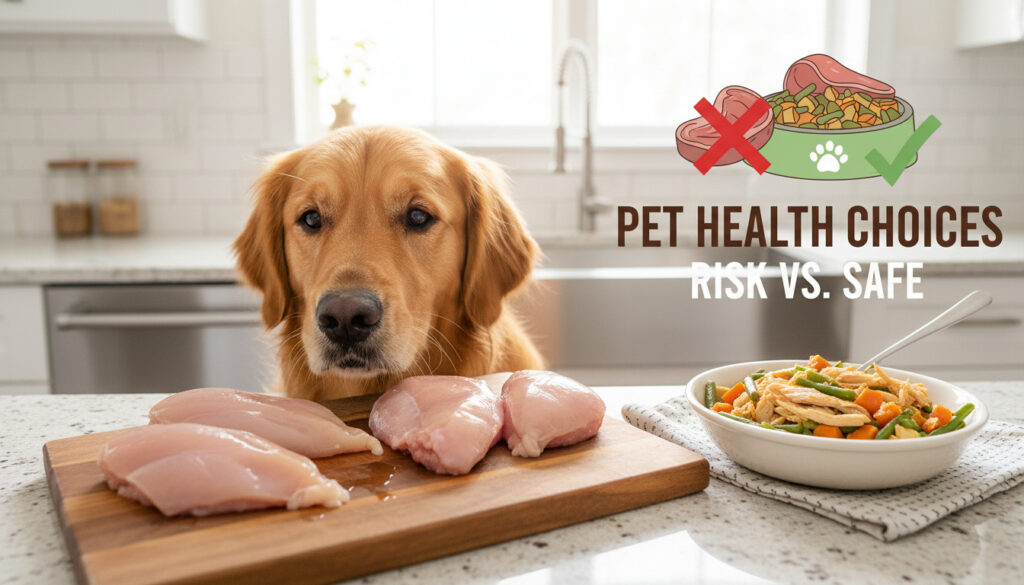
Can Dogs Eat Raw Chicken – Health Risks and Safe Alternatives
Raw chicken represents one of the most contentious subjects in contemporary canine nutrition. Despite persistent advocacy from raw diet proponents, substantial veterinary evidence and regulatory findings demonstrate that uncooked poultry poses significant health hazards to dogs, extending well beyond simple digestive upset to include bacterial infection, neurological damage, and physical injury from bones.
The risks manifest across multiple biological systems. Pathogenic contamination affects not only the animals consuming the meat but also creates zoonotic transmission pathways to human household members. Puppies, senior dogs, and immunocompromised animals face particularly acute dangers from these exposures.
This examination analyzes the documented mechanisms of harm, the specific symptom timelines owners should monitor, and evidence-based alternatives for providing optimal canine nutrition without compromising safety.
Is Raw Chicken Safe for Dogs?
Veterinary consensus definitively classifies raw chicken as unsafe for canine consumption. The meat routinely harbors pathogenic organisms that survive freezing and pose severe health threats to dogs regardless of age or breed.
- Approximately one-third of frozen raw meat diets purchased online contain Salmonella, Listeria, or toxigenic E. coli.
- A 2017 epidemiologic study verified raw meat consumption as a significant independent risk factor for Salmonella shedding in dogs.
- Canine stomach acid provides insufficient protection against salmonella bacterial loads present in raw poultry.
- Certain bacterial toxins survive freezing temperatures, maintaining virulence despite storage conditions.
- University of Melbourne researchers established a causal link between raw chicken feeding and acute polyradiculoneuritis, a neurological disorder similar to Guillain-Barré Syndrome.
- Daily raw chicken feeding increases APN risk substantially compared to occasional consumption.
- Veterinary sources confirm that puppies, seniors, and immunosuppressed dogs face heightened susceptibility to complications.
| Risk Category | Severity | Specific Concerns |
|---|---|---|
| Bacterial Load | Critical | Salmonella, Campylobacter, Listeria, E. coli, C. perfringens endemic in poultry supply |
| Neurological Impact | High | APN development linked to Campylobacter exposure within 3–10 days |
| Skeletal Safety | Severe | Bone splintering causing esophageal or intestinal perforation |
| Nutritional Balance | Moderate | Incomplete amino acid profile leading to deficiencies over time |
| Toxin Stability | High | Endotoxins resist freezing and partial cooking temperatures |
| Zoonotic Potential | Significant | Cross-contamination via saliva, feces, and food preparation surfaces |
| Population-Specific Danger | Extreme | Mortality risk elevated in puppies, seniors, and immunocompromised animals |
What Happens If a Dog Eats Raw Chicken?
Dogs ingesting raw chicken typically present with vomiting, diarrhea, and abdominal discomfort within the first twenty-four hours. Veterinary nutrition guidelines indicate that symptoms persisting beyond this window require professional intervention, while severe cases progress to fever, dehydration, and systemic infection driven by bacterial toxins.
Neurological Complications
University of Melbourne research confirms that campylobacter bacteria in raw chicken trigger acute polyradiculoneuritis in susceptible animals. This autoimmune condition attacks peripheral nerves, producing ascending paralysis beginning in the hind limbs. Risk factors include daily raw chicken consumption, inadequate freezing protocols, or meat that is not absolutely fresh.
Hind limb weakness, difficulty walking, or respiratory distress appearing three to ten days after raw chicken consumption require emergency veterinary evaluation. These signs indicate potential acute polyradiculoneuritis, which can progress to life-threatening respiratory paralysis without immediate intervention.
Gastrointestinal and Systemic Responses
Beyond neurological threats, endotoxins produced by bacteria in raw chicken cause fever and severe dehydration. Immunocompromised dogs face particular vulnerability to systemic infections that can prove fatal. Long-term consequences include chronic diarrhea and disrupted gut microbiome diversity requiring extended recovery protocols. For detailed guidance on appropriate meat portions for dinner, consult Hur mycket kött per person middag.
Can Dogs Eat Raw Chicken Bones?
Veterinary consensus firmly rejects the safety of raw chicken bones for canine consumption. Medical evidence demonstrates that these bones fracture into sharp fragments capable of lodging in the esophagus, stomach, or intestinal tract.
Structural Integrity and Splintering
Raw poultry bones possess brittle architecture that splinters under mastication pressure. These fragments create immediate choking hazards and risk perforation of the digestive lining. Contrary to myth, raw bones present equivalent dangers to cooked bones in terms of structural failure.
Internal Trauma Risks
Esophageal tears, gastric punctures, and intestinal blockages represent the primary injury patterns observed in emergency veterinary practice. Specialists recommend raw beef or lamb bones as alternatives for dental health maintenance, strictly avoiding all poultry bones regardless of preparation method.
Raw Chicken in Dog Diets: Benefits and Risks
Proponents of Biologically Appropriate Raw Food diets cite ancestral feeding patterns and enzyme preservation. However, clinical evidence indicates that raw chicken alone creates nutritional deficiencies over time, lacking balanced calcium-to-phosphorus ratios and essential vitamins necessary for long-term canine health.
Vulnerable Populations
Dogs receiving immunosuppressant medications, undergoing cancer treatment, or those with autoimmune conditions face exponentially higher risks from bacterial exposure. These populations should avoid raw food diets entirely.
Dogs with cancer, those on immunosuppressant medications, or animals with diagnosed autoimmune disorders face significantly elevated mortality risks from raw chicken bacterial contamination. Zero-tolerance policies apply for these populations.
More related posts
 Marilyn Manson: Facts, Controversies, and 2025 Biography
 Sonia McMahon: Life, Death, and Legacy
 Hannah Fry Biography: Mathematician, Author, Broadcaster
 Amber Sherlock: Age Discrimination Case and Career Update
 John Holmes: Cause of Death, Net Worth, and Biography
 Robot Building Supplies: Locations, Prices & Reviews Near Me
 Four Pillars Gin: Origin, Lion Owner, Reviews & Price
 Abby Lee Miller: Health Update, Prison & Net Worth
