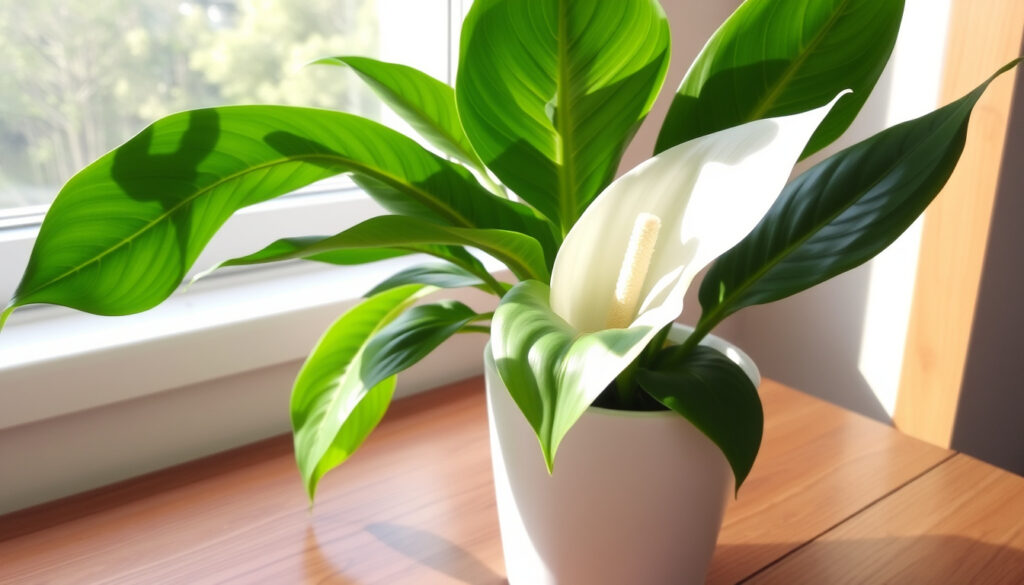
Peace Lily Care: How to Grow Spathiphyllum Indoors
There’s a reason peace lilies have earned a spot in millions of living rooms: they survive the dim corners where other plants give up, but keeping one happy enough to produce those elegant white blooms takes more than just neglect. This guide pulls together research from horticultural experts to show you exactly how to balance light, water, and nutrients for a thriving Spathiphyllum.
Popularity rank among houseplants: Top 10 most common houseplants worldwide ·
Air purification (NASA Clean Air Study): Removes benzene, formaldehyde, and trichloroethylene ·
Species count (genus Spathiphyllum): Approximately 40 recognized species ·
Average height indoors: 1 to 4 feet (0.3–1.2 m) ·
Toxicity level to pets: Mildly toxic due to calcium oxalate crystals ·
Bloom cycle frequency: Twice per year (spring and fall) with proper care
Quick snapshot
- Peace lilies are listed in NASA’s Clean Air Study for removing indoor pollutants (NASA Technical Reports Server (federal research agency))
- Overwatering leads to root rot and is the most common cause of death (South Dakota State University Extension (academic extension service))
- Peace lilies prefer distilled or rainwater to avoid brown leaf tips (Royal Horticultural Society (UK gardening authority))
- Exact number of days between waterings depends on pot size, soil, and microclimate (Ask Extension (cooperative extension Q&A))
- Effectiveness of fluoride removal from water by the plant is not fully quantified (Ask Extension (cooperative extension Q&A))
- Watering frequency drops from every 5–7 days in spring/summer to every 10–14 days in winter (Royal Horticultural Society (UK gardening authority))
- Blooms typically appear twice per year: spring and fall, with 4–6 weeks of flower life (Bloomscape (indoor plant care specialist))
- Propagation by division in spring is the most reliable method to multiply your plant (Royal Horticultural Society (UK gardening authority))
- Adjust care after repotting: reduce water and fertiliser for 4–6 weeks to avoid root shock (Royal Horticultural Society (UK gardening authority))
Here are the key identifiers for the peace lily, based on botanical records.
| Attribute | Value |
|---|---|
| Common name | Peace lily |
| Botanical name | Spathiphyllum spp. |
| Family | Araceae |
| Native region | Tropical Americas and Southeast Asia |
| Light requirement | Indirect bright to low light (Bloomscape (indoor plant care specialist)) |
| Watering frequency | Every 5–14 days depending on season (Flower Shop Network (floral industry resource)) |
| Flowering season | Spring and fall |
| Toxicity | Mildly toxic (calcium oxalate crystals) (University of Florida IFAS Extension (plant science research)) |
Where is the best place to put a peace lily?
The trade-off: brighter light yields more blooms, but direct afternoon sun scorches the leaves. A spot two or three feet from a sunny window is the sweet spot.
Light requirements: bright indirect vs. low light
- Peace lilies do best in medium to bright indirect light and should never receive direct sunlight.
- East-facing windows provide ideal morning sun without the intense afternoon heat.
- North- or east-facing rooms are also suitable because they receive steady, gentle light.
- Peace lilies tolerate low light but bloom less — the plant survives but may stop producing flowers.
Temperature and humidity preferences
Optimal temperatures range between 65–80°F (18–27°C). The Royal Horticultural Society stresses that peace lilies are tropical plants and dislike cold drafts. Keep them away from air conditioning vents and drafty windows in winter. Humidity above 50% helps prevent brown leaf edges.
Avoiding drafts and direct sun
- Direct sun burns the leaves, leaving yellow or brown patches.
- Cold drafts below 55°F (13°C) cause drooping and slowed growth.
- Heating vents dry out the air and can make leaves curl.
The implication: the perfect location is a bright, warm, draft-free corner where the plant can see the sky but not the sun.
How do you care for a peace lily indoors?
Watering guidelines and moisture balance
- Water when the top inch of soil feels dry — that’s the single most reliable sign.
- After watering, drain any standing water from the saucer within 30 minutes to prevent root rot.
- Some growers let the plant droop slightly before watering — peace lilies often recover quickly.
Soil type and drainage
A well-draining potting mix with perlite or orchid bark works best. The University of Florida IFAS Extension recommends a mix that holds moisture but allows excess water to flow freely. Standard indoor potting soil amended with 20% perlite gives good drainage.
Fertilizing schedule
- Fertilise monthly during the growing season (April–October) with a balanced liquid fertiliser.
- Cut back fertiliser in winter when growth slows.
- Over-fertilising can burn roots and cause leaf discolouration.
Cleaning leaves and pruning
Wipe leaves with a damp cloth to remove dust, which blocks light absorption. The RHS notes that clean leaves improve photosynthesis. Prune yellow or dead leaves at the base to keep the plant tidy and direct energy to new growth.
The pattern: consistent care prevents most issues.
What are the disadvantages of peace lilies?
Toxicity to pets and humans
All parts contain calcium oxalate crystals — soluble in water and highly irritating if chewed or swallowed. The ASPCA classifies peace lilies as toxic to cats and dogs. Symptoms include drooling, pawing at the mouth, and vomiting.
Leaf browning and yellowing
- Brown leaf tips are often caused by fluoride in tap water or low humidity.
- Yellow leaves in older foliage is normal, but widespread yellowing usually signals overwatering.
- Drooping leaves can mean too much or too little water — check the soil before acting.
Susceptibility to overwatering
Overwatering is the number one killer of peace lilies. The plant cannot sit in waterlogged soil because the roots suffocate and rot. Always ensure the pot has drainage holes and never leave water in the drip tray for more than half an hour.
Drooping leaves and root rot
Drooping that does not correct within a few hours of watering often means root rot has set in. At that point, repotting with fresh soil and trimming away mushy roots is the only remedy.
Upsides
- Thrives in low-light spaces where most plants struggle
- Removes common indoor air pollutants (benzene, formaldehyde, trichloroethylene)
- Produces elegant white blooms twice a year with minimal care
- Low water demand — forgiving if you forget a week
Downsides
- Toxic to pets and humans if ingested
- Highly sensitive to overwatering — easy to kill with kindness
- Brown tips and yellow leaves can be unsightly and need troubleshooting
- Blooming is inconsistent without proper light and temperature cycling
The implication: weigh these trade-offs before choosing a peace lily for your home.
How do I get my peace lily to flower again?
Light adjustments for bloom induction
Increase bright, indirect light to stimulate flowering. The New York Botanical Garden notes that peace lilies need more light during the day than many owners realize. Move the plant closer to an east- or north-facing window to boost bloom potential.
Fertiliser with higher phosphorus
Use a phosphorus-rich fertiliser (e.g., 10-30-10) every two weeks in spring. Phosphorus supports flower development. The RHS recommends switching to a high-potash feed once buds appear to extend bloom life.
Temperature cycling between day and night
Provide 2–3 months of cool nights (55–65°F) to trigger buds. Many indoor growers achieve this naturally in autumn by turning down the thermostat. Consistent night-time cooling is a reliable bloom cue for peace lilies.
Patience and seasonal timing
Blooms typically appear in spring and fall. After flowering, remove spent blossoms at the base to encourage reblooming. If the plant does not flower after a season of adjusted care, check light levels — insufficient light is the most common barrier.
Peace lilies bloom on their own schedule, but you can nudge them by replicating the seasonal cycle: more spring light, a phosphorus boost, and cooler nights.
What this means: consistent light and temperature cues are your best tools.
How often should a peace lily be watered?
Signs the plant needs water
- The easiest indicator is drooping leaves — when they begin to slump, it’s time to water.
- Stick your finger 1 inch (2.5 cm) into the soil; if it feels dry, water thoroughly.
- Lightweight pot often means dry soil.
Seasonal watering changes
In spring and summer, water every 5–7 days. In winter, reduce to every 10–14 days because the plant rests. Water needs increase with brighter light and warmer temperatures, and decrease in low light or cooler rooms.
Water quality considerations
Fluoride and chlorine in tap water can cause brown leaf tips. The RHS recommends using distilled, filtered, or rainwater when possible. If you must use tap water, let it sit out overnight to let chlorine dissipate. The pattern: watering is the most variable skill. Learn to read the plant — droop and dry soil — rather than sticking to a rigid calendar.
Step-by-step peace lily care routine
- Check weekly: Feel the top inch of soil. If dry, water thoroughly until runoff drains from the pot.
- Drain immediately: Empty the saucer within 30 minutes to prevent root rot.
- Wipe leaves monthly: Use a damp cloth to remove dust and improve photosynthesis.
- Fertilise monthly from April to October with a balanced liquid fertiliser.
- Rotate the pot every two weeks to prevent lopsided growth toward the light source.
Skipping the weekly soil check is the fastest path to a drooping, angry peace lily. Building this one habit prevents nine out of ten common problems.
The implication: simple routines keep your peace lily thriving.
Expert perspectives on peace lily care
“Peace lilies are among the top ten plants for removing indoor volatile organic compounds. Their high transpiration rate pulls pollutants into the root zone and breaks them down.”
— NASA Clean Air Study, 1989 (NASA Technical Reports Server (federal research agency))
“For consistent flowering, give peace lilies bright indirect light and a cool period of 55–65°F at night for eight weeks. They need that temperature drop to set buds.”
— Royal Horticultural Society (RHS (UK gardening authority))
“Most peace lily problems stem from watering. People either overwater and rot the roots or underwater and let the plant stress. Feeling the top inch of soil is the only reliable guide.”
— South Dakota State University Extension (SDSU Extension (academic extension service))
The pattern: experts agree that watering discipline is the key to success.
Peace lilies reward consistency, not complexity. The single biggest mistake is overwatering, which kills more plants than pests, disease, or bad light combined. For first-time owners, the clear action is: ignore the calendar and touch the soil. For experienced growers, the next frontier is manipulating light and temperature to unlock that second annual bloom. The trade-off is patience — peace lilies move on their own tempo.
scottsmiraclegro.com, tropicalplantsofflorida.com, whiteflowerfarm.com, nowandforeverflowers.com, gardenia.net, patchplants.com
Frequently asked questions
Is peace lily safe for cats and dogs?
No. Peace lilies contain calcium oxalate crystals that are toxic if ingested. Symptoms include drooling, vomiting, and difficulty swallowing. Contact your vet if you suspect poisoning.
Can peace lilies grow in water alone?
Yes, peace lilies can be grown hydroponically in water, but they need added nutrients. Change the water weekly and add a drop of liquid fertiliser every month.
Why are my peace lily leaves drooping even after watering?
Drooping after watering usually indicates root rot from overwatering. Check the roots: trim any brown, mushy parts and repot in fresh, well-draining soil.
Do peace lilies need to be repotted every year?
Repot every 2–3 years or when roots circle the pot. Choose a pot only 1–2 inches larger; too big a pot retains excess moisture and invites rot.
Should I cut off brown leaf tips on my peace lily?
Yes, trim brown tips with clean scissors to improve appearance. Cut at an angle to mimic the natural leaf shape. Address the cause — usually tap water or low humidity.
How long does a peace lily flower last?
Each bloom lasts about 4–6 weeks. After the white spathe turns green and fades, cut the stalk at the base to encourage new flowers.
Can peace lilies handle outdoor summer conditions?
Yes, in shaded outdoor areas where temperatures stay above 60°F (15°C). Avoid direct sun and bring the plant indoors before the first frost.
More related posts
 Supergirl Woman of Tomorrow: 2026 Film Plot, Cast, Release
 Marcus Stoinis: Age, Height, Retirement & Partner
 Jake Weatherald: Darwin’s First Test Cricketer
 Melbourne to Hong Kong – Flight Times Prices Direct Routes
 Tom Cullen: Welsh Actor, Downton Abbey, Tatiana Maslany
 West Beach Surf Club: Menu PDF, Prices, Membership Guide
 Can Dogs Eat Raw Chicken – Health Risks and Safe Alternatives
 Derek Jeter: Biography, Career, Wife, Kids, Net Worth & More
