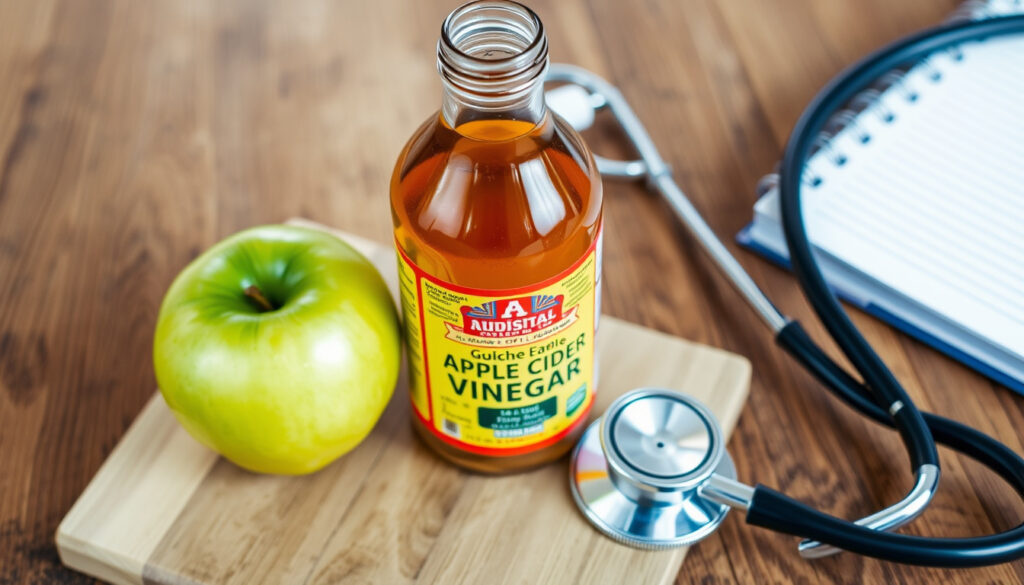
Apple Cider Vinegar: What Science Says About Its Health Claims
Apple cider vinegar is a staple in health‑food aisles, but its reported benefits are often exaggerated by anecdotal claims. This guide examines the research behind blood sugar, weight loss, warts, and more to separate what works from what’s hype.
ACV pH level: 2.5 – 3.0 · Acetic acid concentration: 5% – 6% · Calories per tablespoon (15 mL): 3 kcal · Global market size (2023): $1.5 billion (estimated)
Quick snapshot
- Lowers post‑meal blood glucose (American Heart Association (cardiology research))
- May aid weight loss when combined with calorie restriction (Cleveland Clinic (medical center))
- Wart‑removal efficacy (Northwestern Medicine (academic medical center))
- Effect on menstrual cramps (Northwestern Medicine (academic medical center))
- Benefit for HPV disinfection (Northwestern Medicine (academic medical center))
- 2024 meta‑analysis from the American Heart Association reports fasting glucose reductions of about 8 mg/dL (American Heart Association (cardiology research))
- Larger, longer‑term trials needed to confirm weight‑loss effects (American Heart Association (cardiology research))
The numbers below show the basic composition of apple cider vinegar — a starting point for understanding what you’re actually putting in your body.
| Attribute | Value |
|---|---|
| pH range | 2.5 – 3.0 |
| Acetic acid content | 5% – 6% |
| Calories per tablespoon (15 mL) | 3 kcal |
| Potassium per tablespoon | 11 mg |
| Typical daily dosage in studies | 1 – 2 tablespoons |
| Fasting glucose reduction (type 2 diabetes, meta‑analysis) | ~8 mg/dL |
| Potential BMI decrease (adolescent study, 12 weeks) | ~2‑point reduction (preliminary) |
What does apple cider vinegar do for your body?
Blood sugar regulation
- Acetic acid delays gastric emptying, which slows carbohydrate absorption and reduces post‑meal glucose spikes (Cleveland Clinic (medical center)).
- A 2024 meta‑analysis cited by the American Heart Association (cardiology research) found that ACV reduced fasting blood glucose by about 8 mg/dL in people with type 2 diabetes who started with higher levels.
- Experts stress that ACV should complement — not replace — medication or dietary changes (Northwestern Medicine (academic medical center)).
The implication: ACV can be a modest tool for glucose management, but it’s not a standalone fix.
Weight management
- A systematic review noted that ACV may help people feel fuller for about two hours after eating, potentially curbing snacking (Cleveland Clinic (medical center)).
- A 12‑week study of 120 adolescents with overweight found ACV contributed to decreases in body weight and BMI (Cleveland Clinic (medical center)).
- The American Heart Association warns that these effects are small and short‑term, and should not be seen as a durable solution (American Heart Association (cardiology research)).
Weight loss from ACV is real but modest — and it only works when paired with a calorie deficit. No study shows it melts fat on its own.
The bottom line: ACV offers modest help with blood sugar and weight, but only as part of broader lifestyle changes.
Antimicrobial effects
- Acetic acid has been shown to kill certain bacteria in lab settings, but evidence for practical infection prevention in humans is weak (Northwestern Medicine (academic medical center)).
- Topical use for skin conditions like warts relies on anecdotal reports, not clinical trials.
The pattern: Antimicrobial effects are plausible but unproven in real-world use.
How long does it take apple cider vinegar to remove a wart?
Application method
- Most home remedies involve soaking a cotton ball in diluted ACV (1 part ACV to 2 parts water) and taping it onto the wart overnight (Northwestern Medicine (academic medical center)).
- Clean the area each morning and repeat daily.
Expected timeline
- Anecdotal reports suggest several weeks of daily application, but no strong clinical evidence supports a specific timeframe (Northwestern Medicine (academic medical center)).
Risks and alternatives
- Undiluted ACV can cause chemical burns and skin damage (Northwestern Medicine (academic medical center)).
- Medical options like cryotherapy or salicylic acid have stronger evidence.
The takeaway: Wart removal with ACV is slow, unproven, and carries risk; try doctor‑recommended treatments first.
Can apple cider vinegar help with periods?
Menstrual cramps
- Anecdotal relief is reported, but no peer‑reviewed studies have confirmed a mechanism or efficacy (Northwestern Medicine (academic medical center)).
Irregular periods
- Some online sources claim ACV can help restore regular cycles, but scientific backing is absent.
The 7‑2‑1 rule connection
- The “7‑2‑1 rule” (7 parts water, 2 parts ACV, 1 part something else) is a folk method, not medically validated (Northwestern Medicine (academic medical center)).
What this means: For menstrual health, ACV is a folk remedy, not a proven treatment.
What will happen if I take apple cider vinegar every day?
Potential benefits
- May lower fasting blood sugar over time, especially in people with type 2 diabetes (American Heart Association (cardiology research)).
- Some evidence suggests improvements in total cholesterol with daily intake of up to 15 mL for more than eight weeks (American Heart Association (cardiology research)).
Risks of long‑term use
- Tooth enamel erosion, throat irritation, digestive discomfort, nausea, and low potassium levels are documented side effects (Northwestern Medicine (academic medical center)).
- ACV can interact with diuretics and insulin, requiring medical supervision (Northwestern Medicine (academic medical center)).
Daily use offers modest glucose and cholesterol benefits, but the cumulative risk to teeth and potassium levels means you can’t treat it like water.
The verdict: Daily ACV can help blood sugar and cholesterol, but side effects and drug interactions make it unsuitable for everyone.
Recommended dosage
- Start with a few drops in water and work up to no more than two tablespoons per day, always diluted (Cleveland Clinic (medical center)).
Can apple cider vinegar reduce belly fat?
Mechanism of action
- Acetic acid may increase fat oxidation and reduce fat storage, but human data are limited (American Heart Association (cardiology research)).
Evidence from studies
- Small studies show modest fat loss, but the effects are secondary to the overall calorie deficit, not spot‑reduction (Northwestern Medicine (academic medical center)).
Lifestyle context
- No food or drink can target belly fat specifically; overall diet and exercise determine fat distribution.
The pattern: ACV’s weight‑related effects are real but marginal — and they vanish without a balanced diet.
How to Use Apple Cider Vinegar Safely
- Dilute it. Mix 1–2 tablespoons with at least 8 oz of water. Never drink it straight.
- Use a straw. Minimize contact with teeth to protect enamel.
- Rinse your mouth with plain water after drinking.
- Start small. Begin with a teaspoon to assess tolerance.
- Time it. Take before meals to aid blood sugar management, or as part of a salad dressing.
- Monitor side effects. Stop if you experience throat pain, digestive upset, or enamel sensitivity.
- Consult your doctor if you take diuretics, insulin, or have kidney issues.
Follow these steps to minimize risk while getting the most from ACV.
What we know vs. what we don’t
Confirmed facts
- Lowers post‑meal blood glucose (American Heart Association)
- May aid weight loss when combined with calorie restriction (Cleveland Clinic)
- Modestly improves total cholesterol in some studies (American Heart Association)
What’s unclear
- Wart removal efficacy (Northwestern Medicine)
- Effect on menstrual cramps (Northwestern Medicine)
- Benefit for HPV disinfection (Northwestern Medicine)
- Long‑term durability of weight loss (American Heart Association)
Expert perspectives
“Some evidence suggests apple cider vinegar may help with blood sugar control when combined with balanced eating patterns, but it should not replace medication or other lifestyle changes.”Source: Northwestern Medicine (academic medical center)
“ACV is safe for most people in small amounts but has not been approved to treat any health conditions. The weight‑loss findings should be interpreted cautiously because the studies were small and short‑term.”Source: Cleveland Clinic (medical center)
Apple cider vinegar offers modest, short‑term benefits for blood sugar and weight when used correctly — but it is not a miracle elixir. The risks of enamel erosion, digestive upset, and drug interactions are real, especially with daily use. For the average person looking to improve metabolic health, the choice is clear: use diluted ACV as a small adjunct to a balanced diet and exercise, or skip it and focus on those fundamentals.
drstanfield.com, pmc.ncbi.nlm.nih.gov, webmd.com, chhs.colostate.edu, shawnwells.com
For a deeper look at the evidence behind these claims, see the detailed overview of science-backed effects of apple cider vinegar.
Frequently asked questions
What is the 7 2 1 rule for menstruation?
The “7‑2‑1 rule” is a folk remedy that involves mixing 7 parts water, 2 parts apple cider vinegar, and 1 part lemon juice or honey. No scientific evidence supports its effectiveness for menstrual regulation.
How can I flush my period faster?
There is no medically proven way to shorten a period. Some people try ACV or herbal teas, but studies have not shown any consistent effect.
What household cleaner kills HPV?
Bleach can inactivate HPV on hard surfaces, but it should never be used on the body. ACV has not been proven to kill HPV on skin or surfaces.
How long does it take bleach to kill HPV?
According to the U.S. CDC, a 10‑minute contact time with a bleach solution (1:10 dilution) can inactivate HPV on non‑porous surfaces.
What kills warts quickly?
Medical treatments like cryotherapy or salicylic acid have the strongest evidence. ACV is a slower, anecdotal alternative that carries a risk of burns.
Are apple cider vinegar gummies effective?
Gummies contain significantly less acetic acid than liquid ACV, and many have added sugar. Their effects are likely weaker than the liquid form.
Can apple cider vinegar interact with medications?
Yes. ACV can lower potassium levels and may interact with diuretics and insulin. Consult a doctor before regular use if you take these medications.
More related posts
 Taylor Frankie Paul: PTSD, Breakups & Faith Shift
 Eve Myles Biography: Career, Family, and Confirmed Facts
 Joanna Lumley: Biography, Health, and Family Facts
 How Many Calories in a Banana? Size, Nutrition, and Diet Tips
 Abella Danger Now: Student Life, Net Worth, Apology
 Sonia McMahon: Life, Death, and Legacy
 AUD to Rupee: Exchange Rate Today | 1 AUD to INR Converter
 ATO Tax Agent Portal: Login, Fast Key Code & Status
